Increase buyer engagement
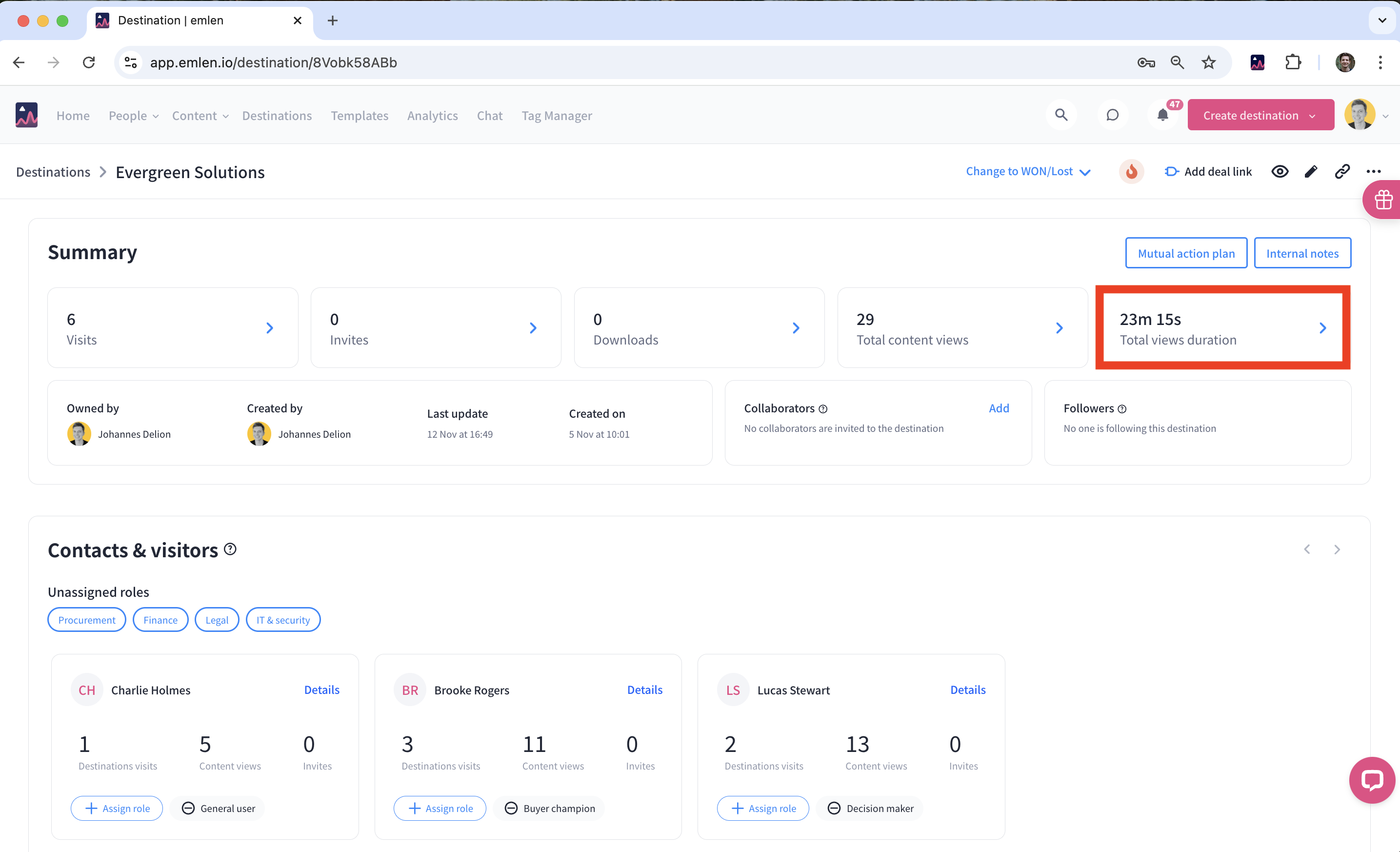
Buyer engagement refers to the total time buyers spend in a Destination (= total views duration). For example, in this case, it’s 23 minutes and 15 seconds.
Benchmarks
The average duration depends on the buying journey stage. Aim for these benchmarks:
| Stage | Buying job from customer's perspective | Low complexity (few stakeholders, max 3 steps) | High complexity (multi-stakeholder, several steps) |
| Early | Problem identification to solution exploration | 4-7 minutes | 5-8 minutes |
| Mid | Solution exploration to requirements building | 17-22 minutes | 27-34 minutes |
| Late | Requirements building to supplier selection | 33-39 minutes | 55-106 minutes |
If your numbers meet or exceed these benchmarks, you’re on track. If not, this guide will help improve your results.
Key factors influencing buyer engagement
- Targeting: Reaching the right leads (ICP fit)
- Timing: Buyer awareness of their problem (early stage) or interest in solutions (mid stage)
- Qualification: How effectively you qualify leads and opportunities
- Relevancy: Aligning content with the prospect’s needs and challenges
This guide focuses on improving relevancy through better Destination structure and content.
Here are 17 tips to improve buyer engagement:
1. Open with a personal video
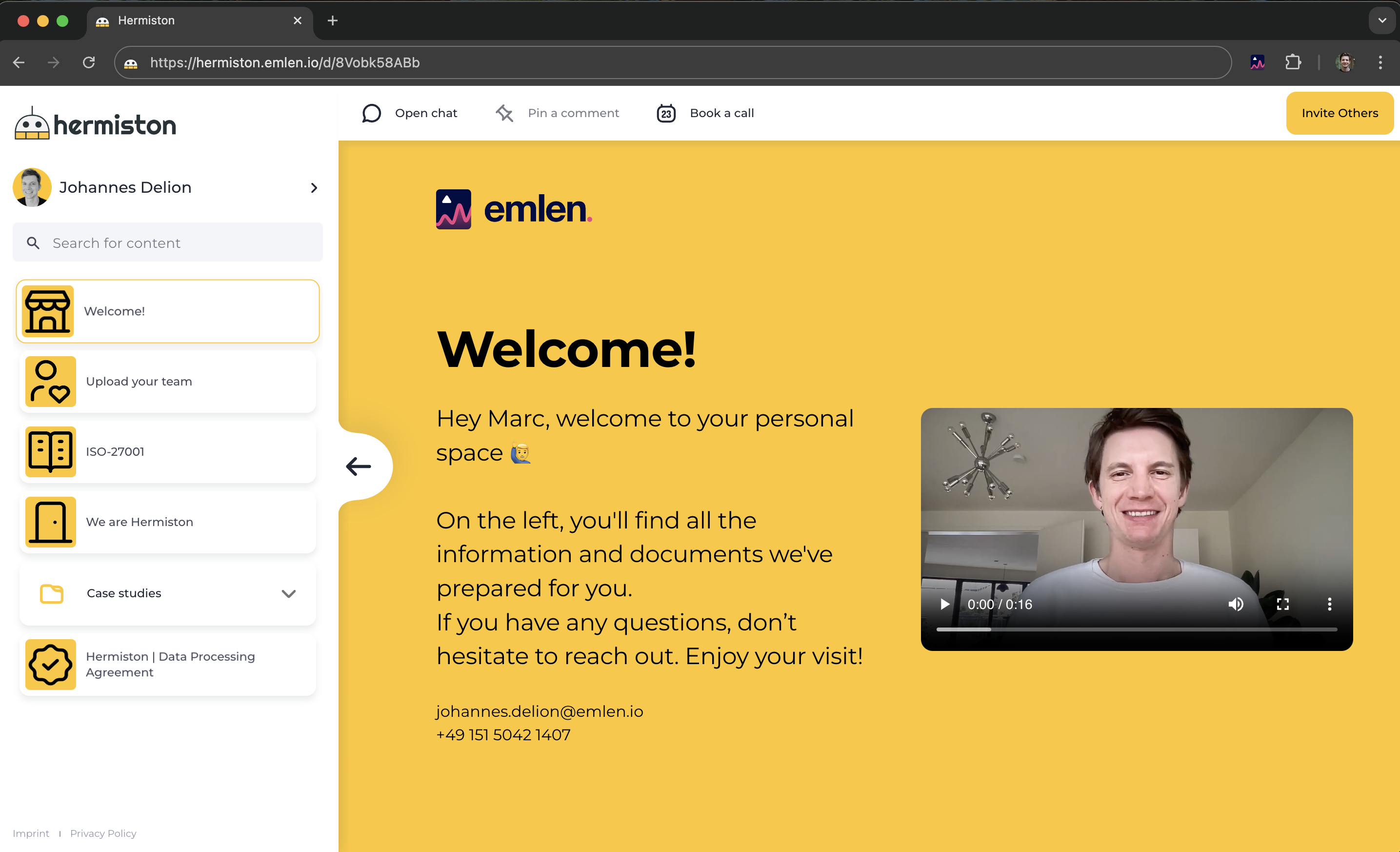
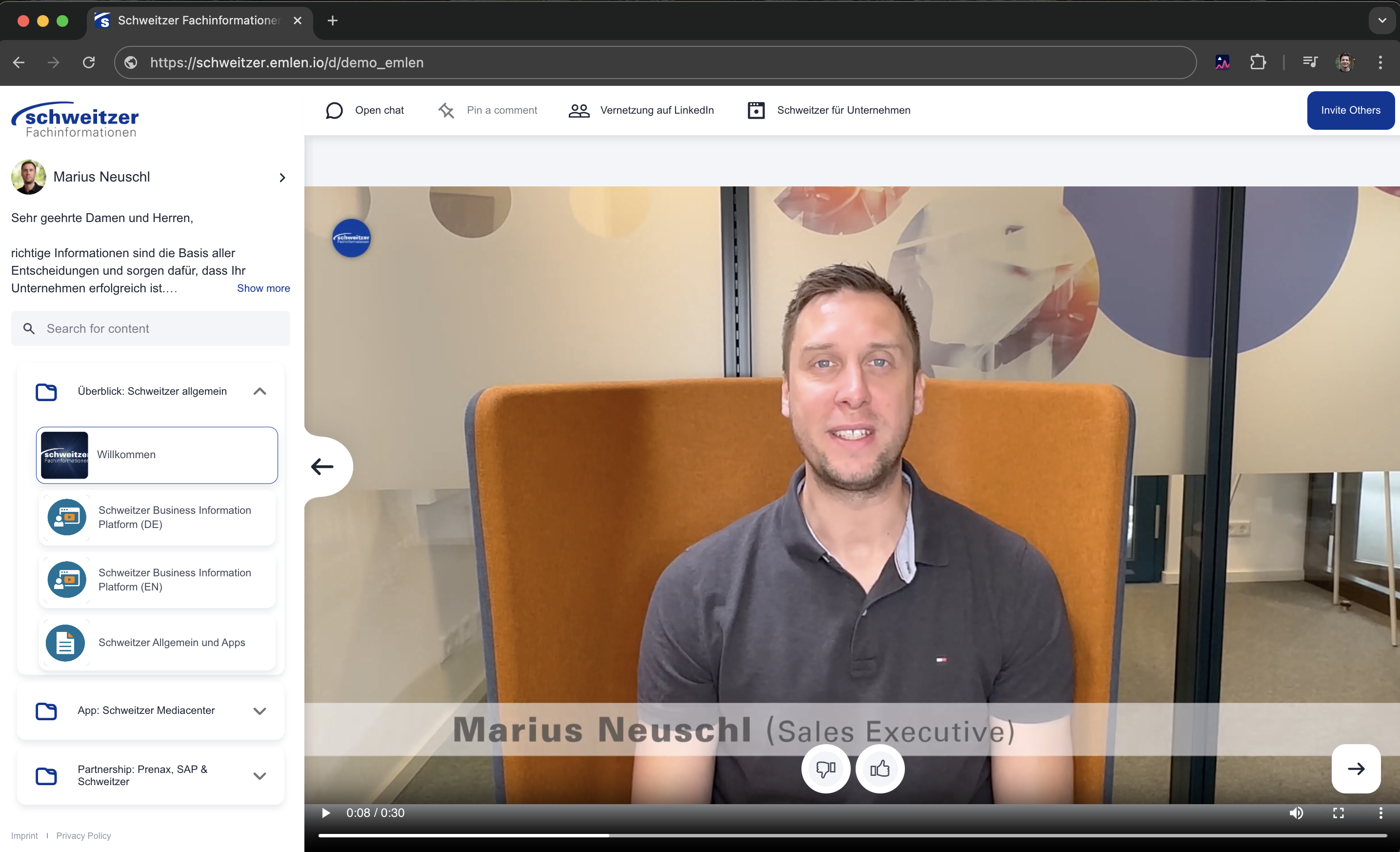
Use the Welcome Page to greet buyers with a personal video.
- Early stage: Generic or personal welcome video
- Mid/late stage: Use personalized videos
Welcome page incl. video:
Video only:
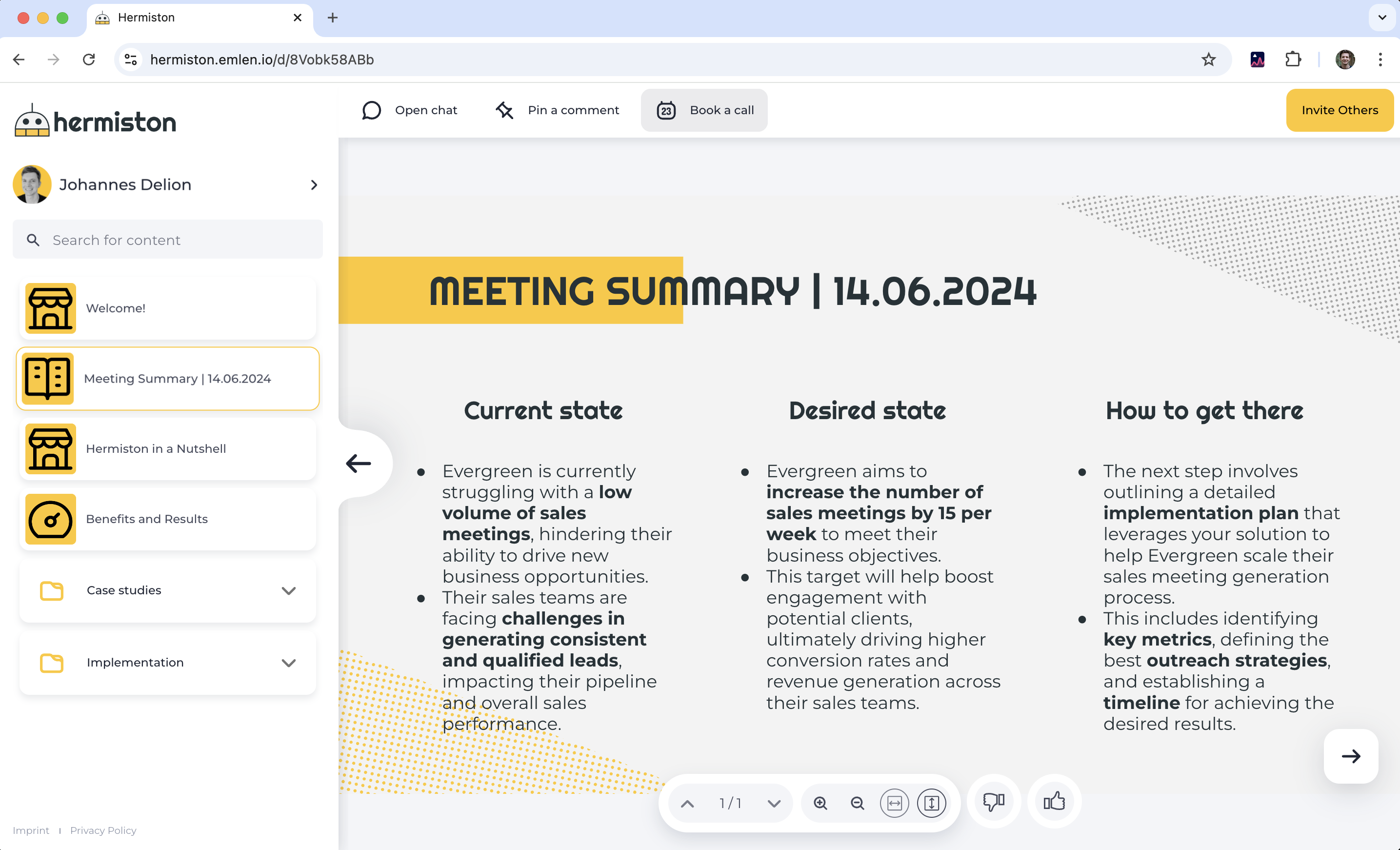
2. Include a (management) summary
Add a concise summary as the second content item, covering:
- Current state (pain points)
- Desired state (goals)
- Next steps
3. Have a clear structure in your Destination
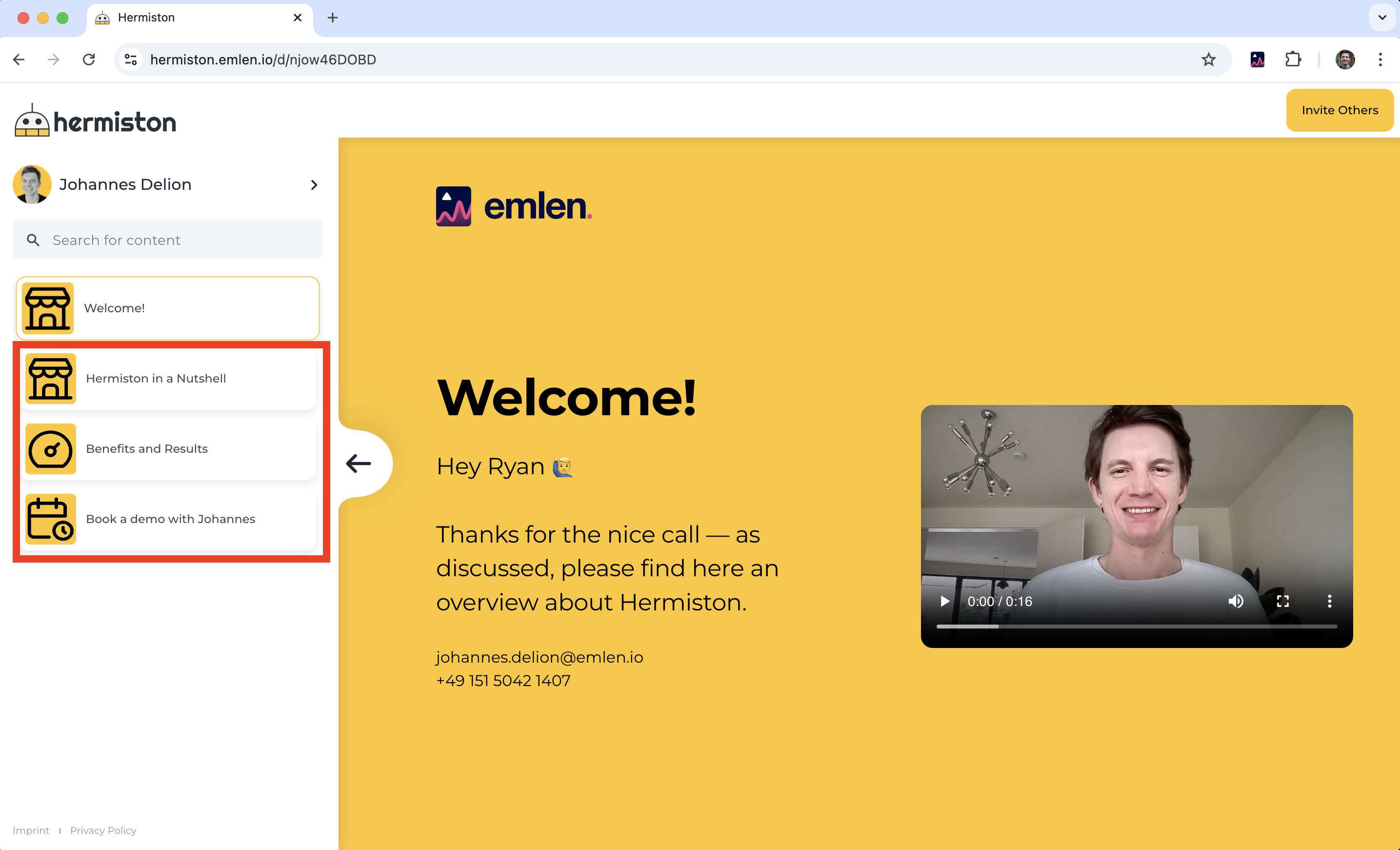
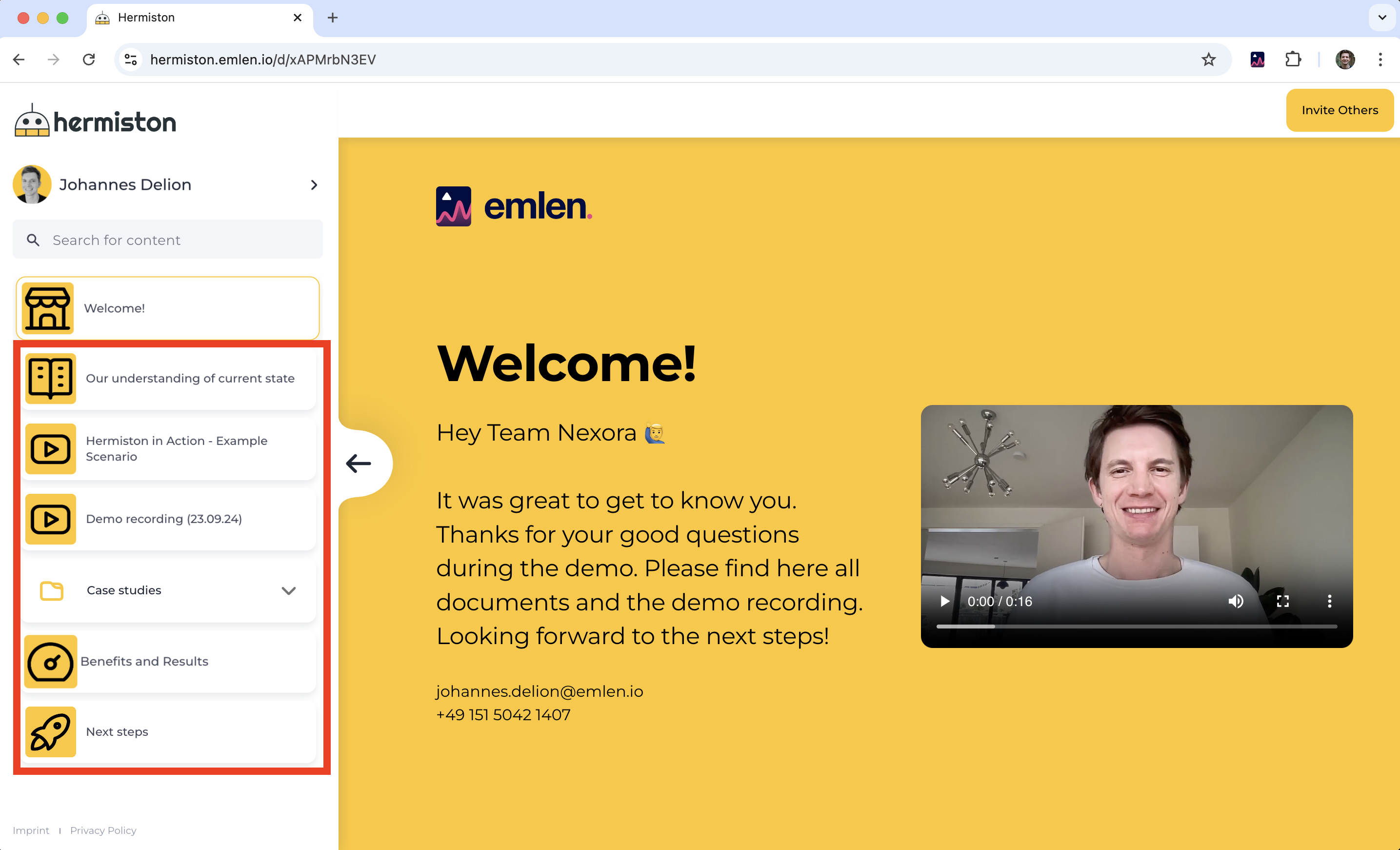
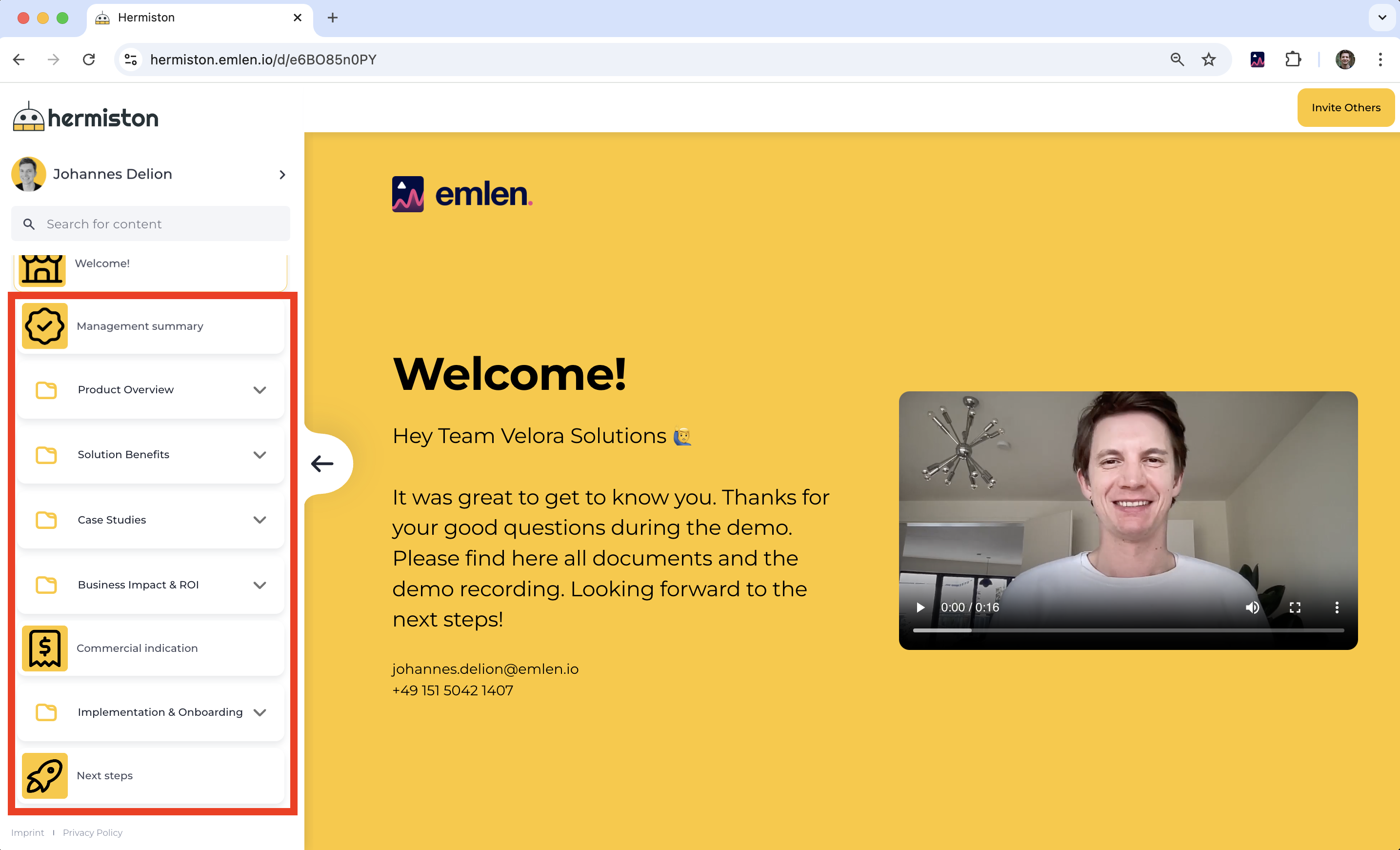
Adapt the Destination structure to the buying stage. This is a proven structure:
| Stage | Structure |
| Early |
|
| Mid |
|
| Late |
|
Example early stage (e.g., after outbound call):
Example mid stage (e.g., after demo):
Example late stage (e.g., in negotiation):
4. Add content thumbnails
Add thumbnails for easier navigation. Learn here how. For example use one each for:
- Home / welcome page
- Document / whitepaper
- Video
- Checklist
- One-pager
- Case study
- Spreadsheet
- Weblink
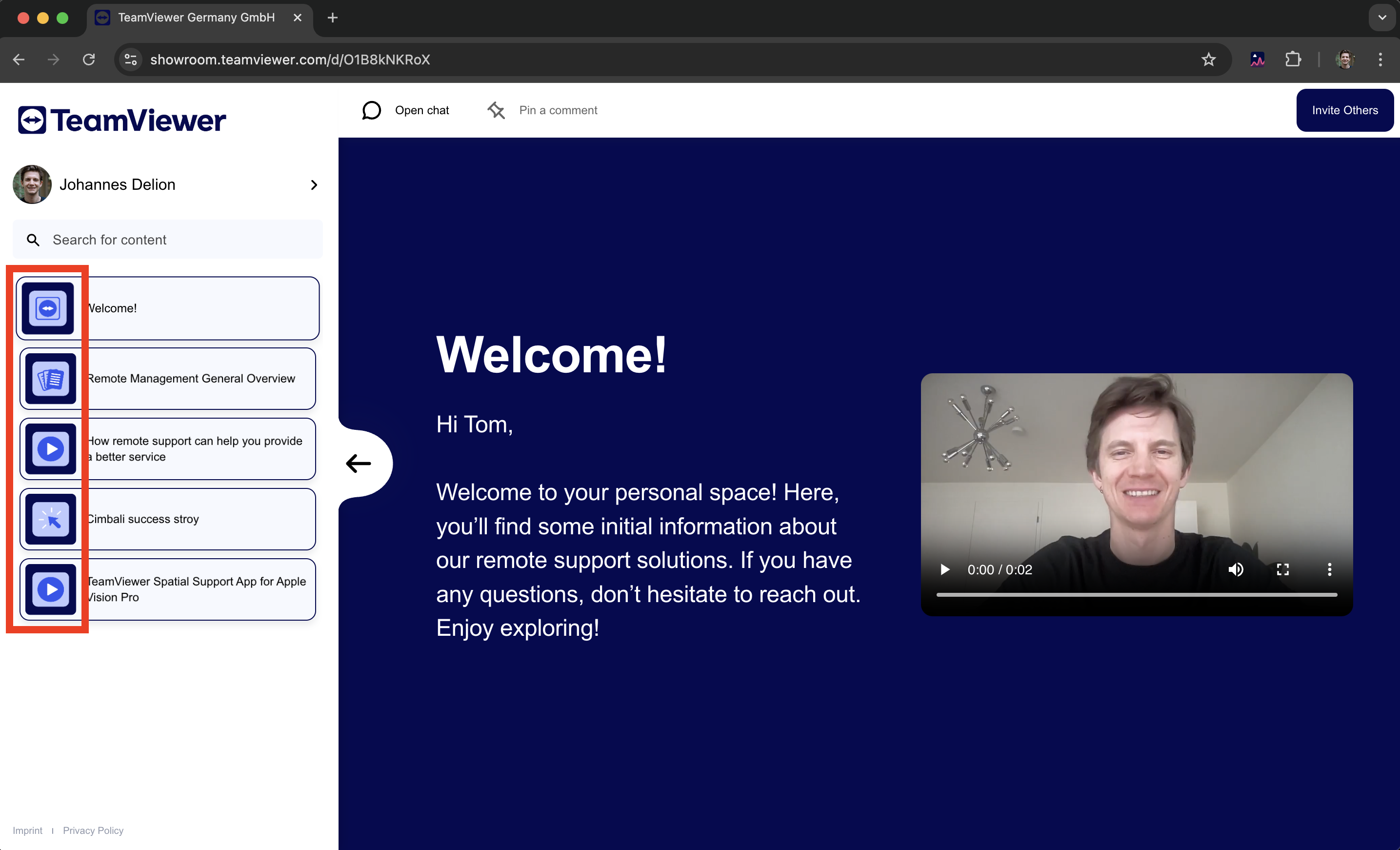
5. Use simple and "speaking" titles
Keep titles short and descriptive. Avoid long, complex titles or unnecessary details. If possible, aim for single-line titles. This is a good example:
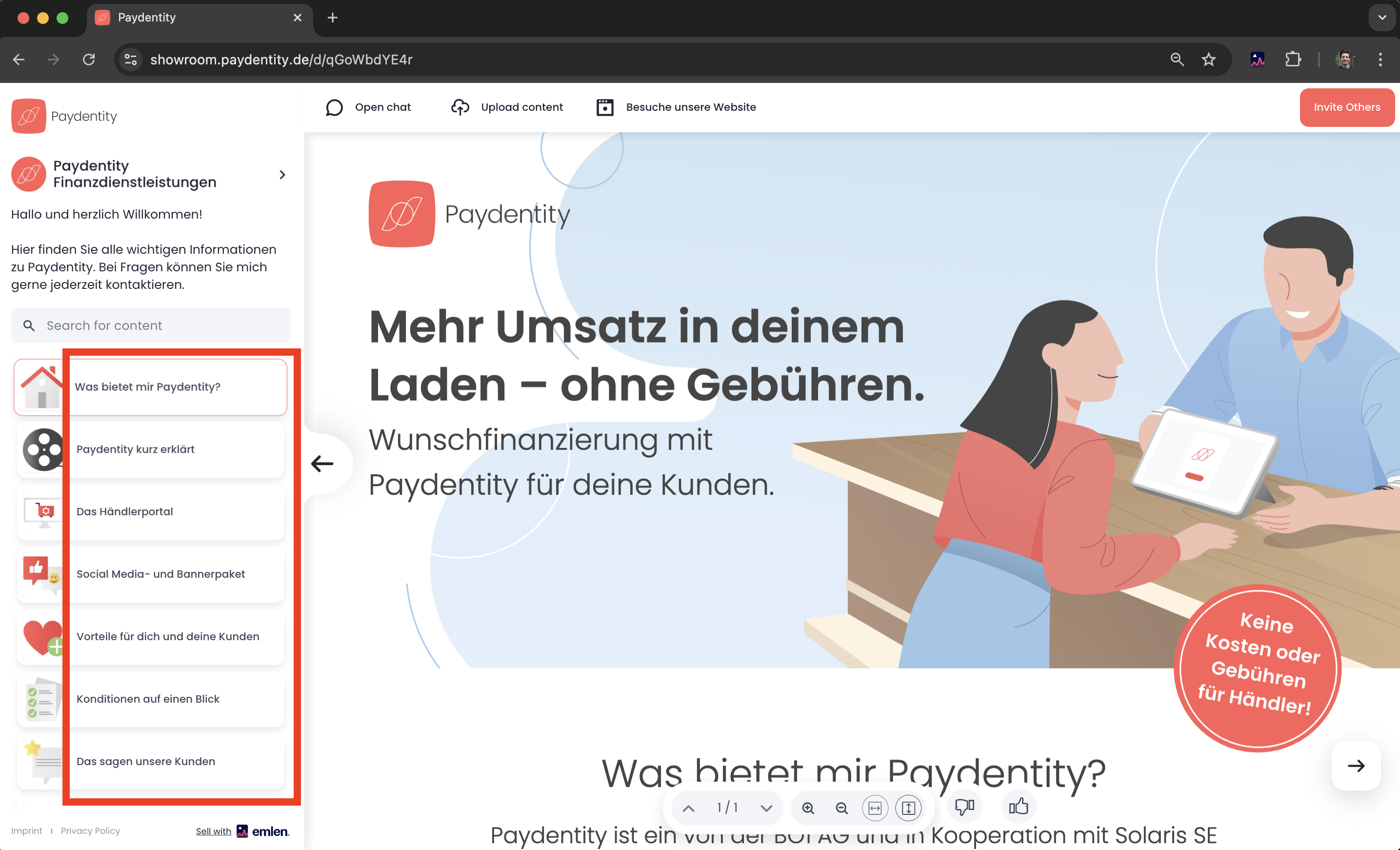
6. Don't overwhelm your buyers with content
Share only what your buyer needs to take the next step. Target these content counts:
| Stage | Number of content assets |
| Early | 3-6 |
| Mid | 5-10 |
| Late | 8-20 |
Keep documents under 20 pages to maintain engagement. Break longer materials, like a 50-page presentation, into topic-based sections for better readability and easier navigation.
7. Personalize the Destination
Personalize not just greetings but the content itself. There are two ways to do this:
7.1 Mix & match generic content
Choose and share generic content that aligns with your prospect’s context, such as:
- Industry
- Use case
- Persona
This approach requires a strong library of generic content. Case studies work well as they can be tailored to industries or use cases. Modularize content to share only the most relevant sections, avoiding long, all-in-one presentations.
7.2 Create customer-specific content
Develop content tailored to the customer’s specific context, such as:
- Personal presentations
- Custom video recordings (e.g., demo, product walkthrough)
- Custom business impact or ROI calculations
The balance between these approaches varies by stage. Here’s a general guideline:
| Stage | Share of mix & match | Share of customer-specific content |
| Early | 80-100% | 0-20% |
| Mid | 60-70% | 40% |
| Late | 20-30% | 70-80% |
It also depends on deal size—larger deals justify greater investment in creating customer-specific content.
8. Share the right information
Ask yourself:
- What buying stage is the prospect in (their current “buying job”)?
- Who is involved in the decision-making process?
- What questions or objections need addressing?
Share content that meets their information needs to stay relevant.
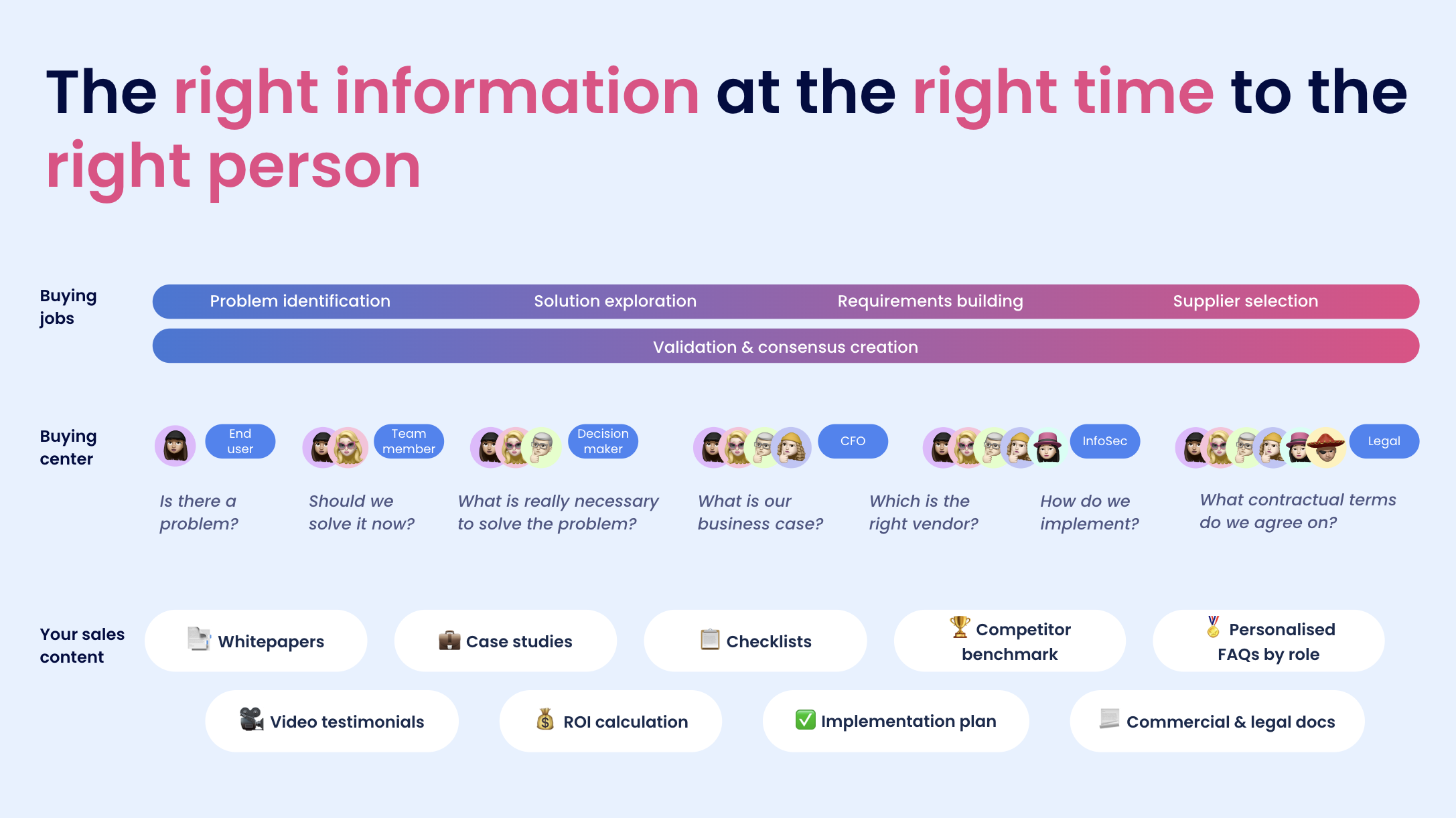
9. Involve all stakeholders in the Destination
As the buying process advances, more stakeholders typically join the decision. Often, a sales champion shares information internally, which can limit your visibility and control. While a strong champion can help, it’s better to get all stakeholders into the Destination. This ensures you can directly meet their information needs and maintain transparency. For more, see the article on multithreading with emlen.
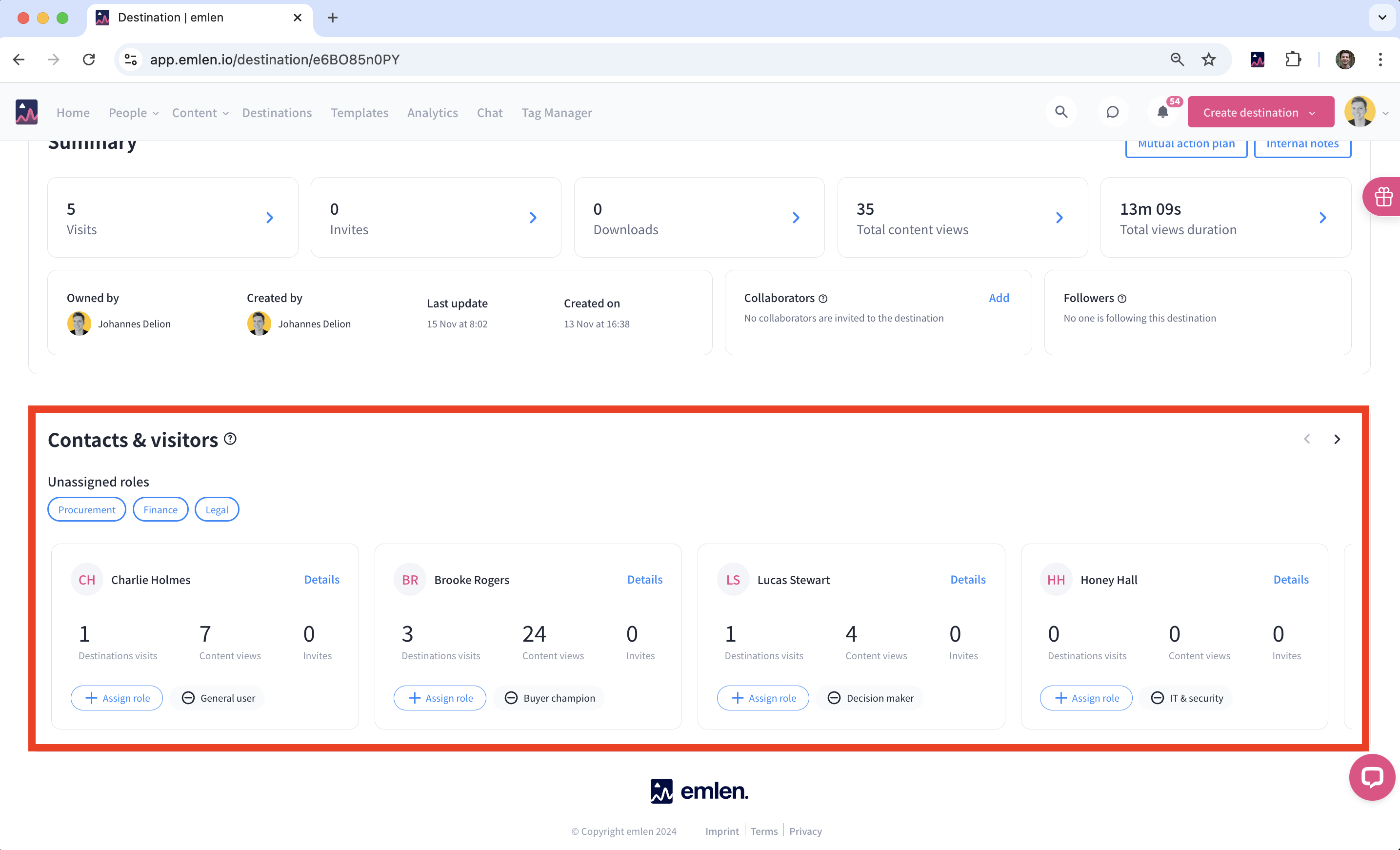
10. Provide regular updates to the buying center
Continuously add value by updating the Destination with new, relevant content. For example:
Hi [Prospect’s Name], I came across this whitepaper on [topic] and immediately thought of you—it aligns with [specific challenge or goal they mentioned]. I added it to our space: https://hermiston.emlen.io/d/Parisian Let me know if you find it useful or have any thoughts! Best regards, |
11. Promote collaborative features
Encourage prospects to use the Destination’s collaborative tools and explain their benefits. For example:
- Mutual Action Plan: “Let’s review these tasks together to track progress and see what’s left to complete.”
- Chat: “If you have questions, you can message me directly here.”
- Pin-a-comment: “You can pin comments or questions directly on the quote, and we’ll address them in our next meeting.”
12. Disversify content formats
Go beyond slide presentations and include:
- Product videos
- Video recordings (of meeting, demo, webinar, etc.)
- Infographics
- Blog posts
- Checklists / One-pagers
- Whitepapers
- Industry reports
- Speadsheets
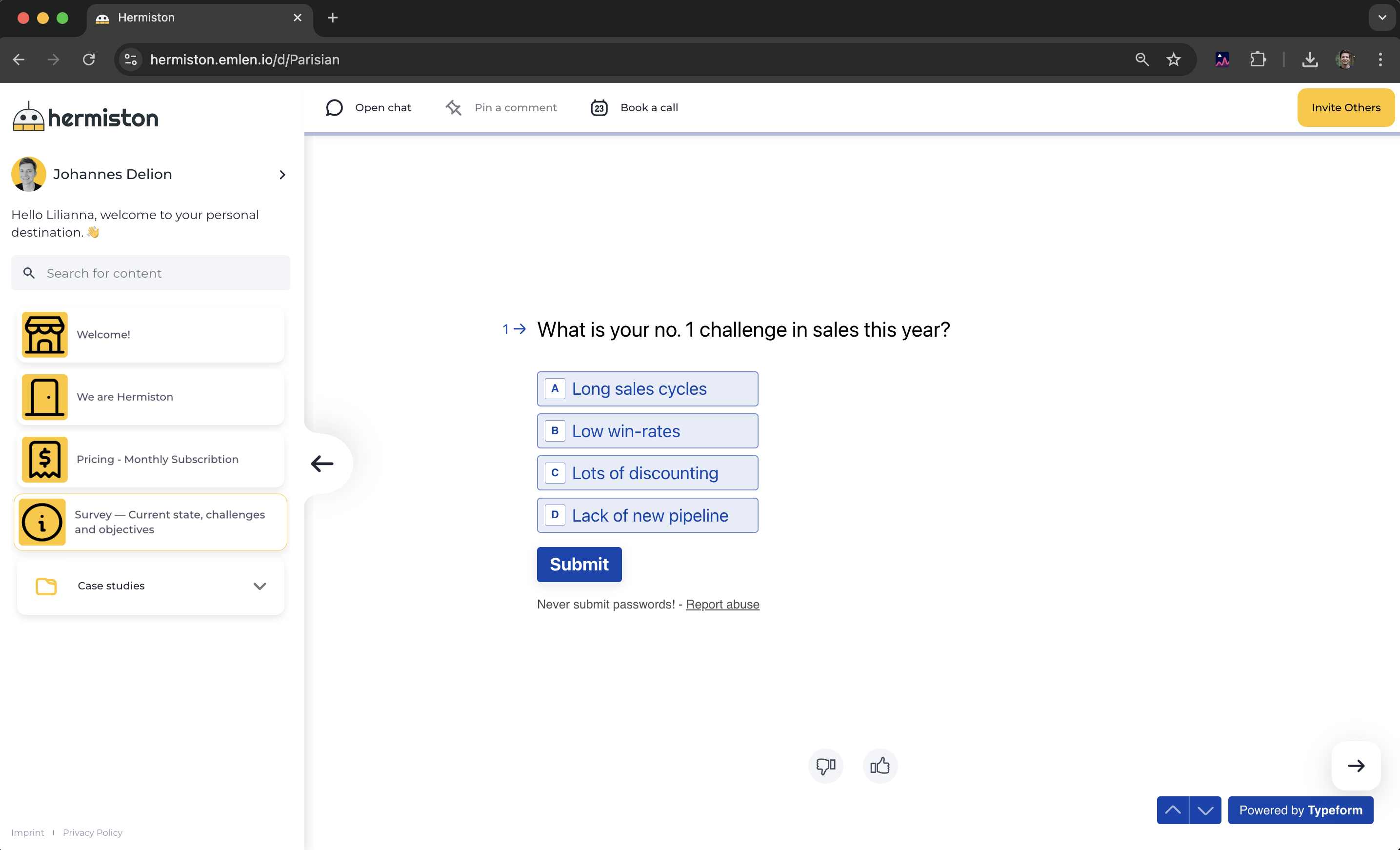
13. Use interactive content
Include tools like surveys or self-assessments (e.g., Typeform, SurveyMonkey) to engage prospects and gather insights. You can also embed interactive calculators, such as ROI tools, using Google Sheets for collaborative editing.
14. Leverage storytelling
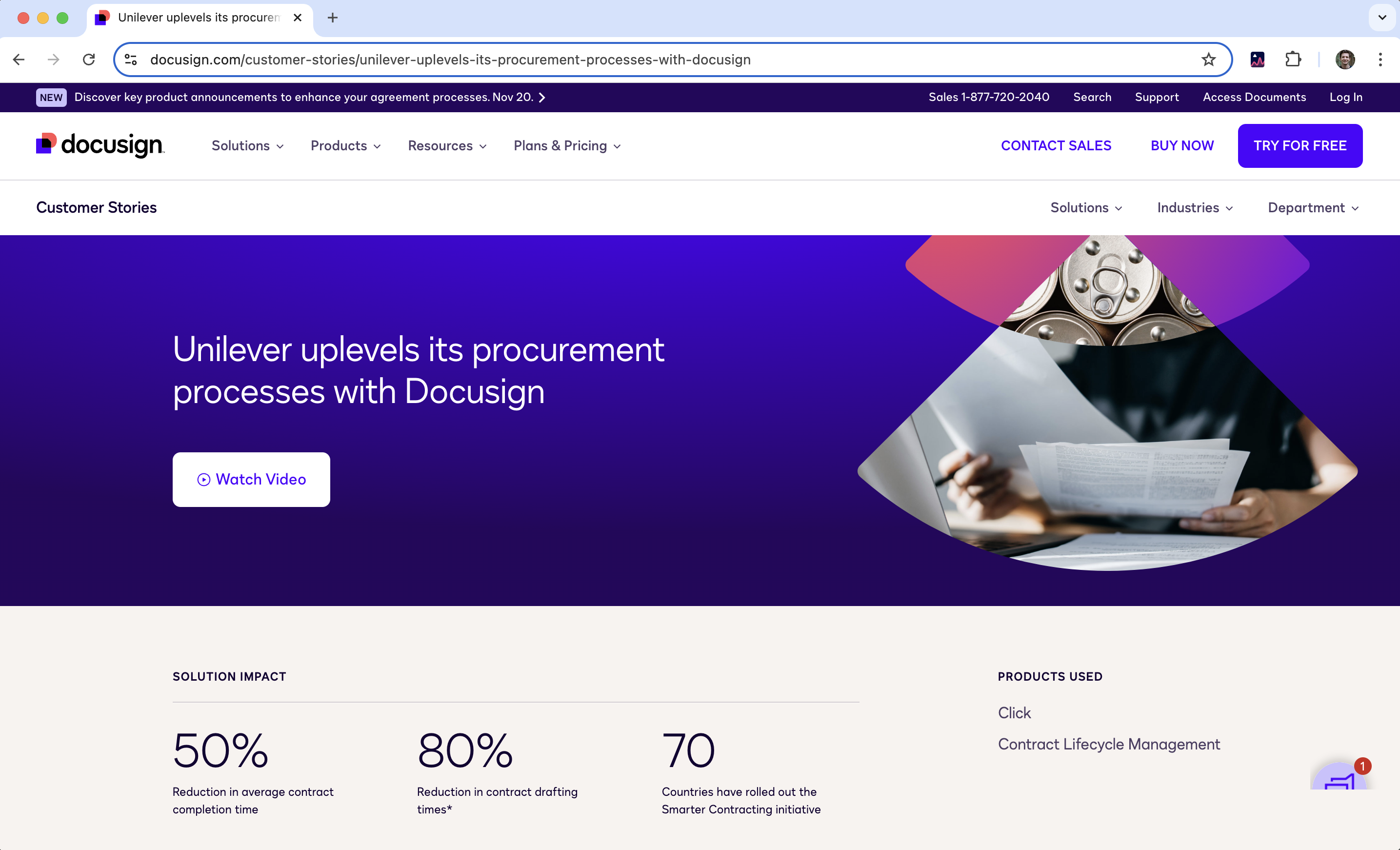
- Customer Success Stories: Share real-life examples of how your product or service transformed a client’s business. Focus on challenges, solutions, and outcomes
- Case Studies with Data: Showcase measurable results that highlight the value your product brings
- You can find a selection of excellent case studies here
15. Data-driven insights
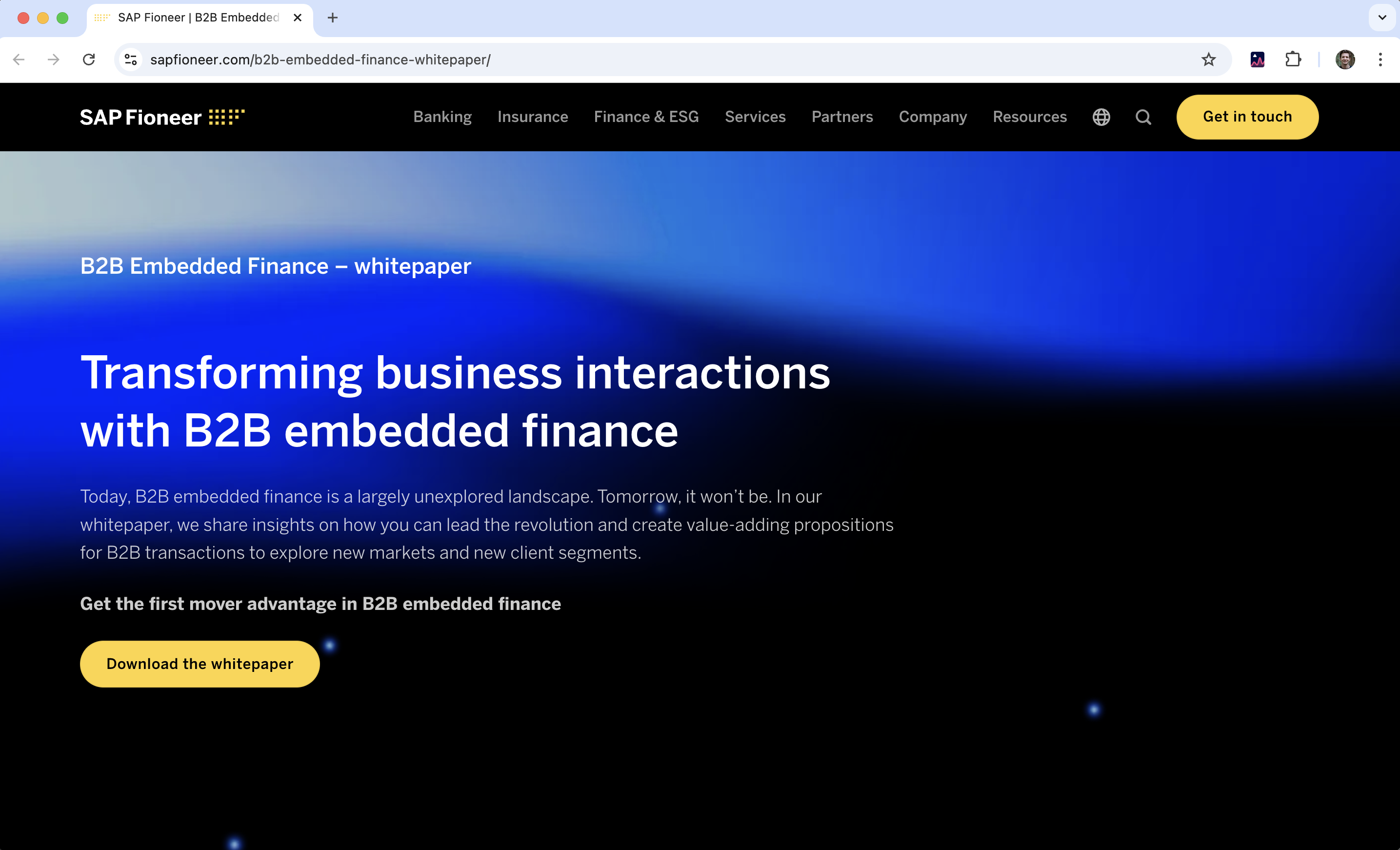
- Share industry reports, white papers, or original research that positions you as a thought leader
- Highlight actionable takeaways to address specific pain points
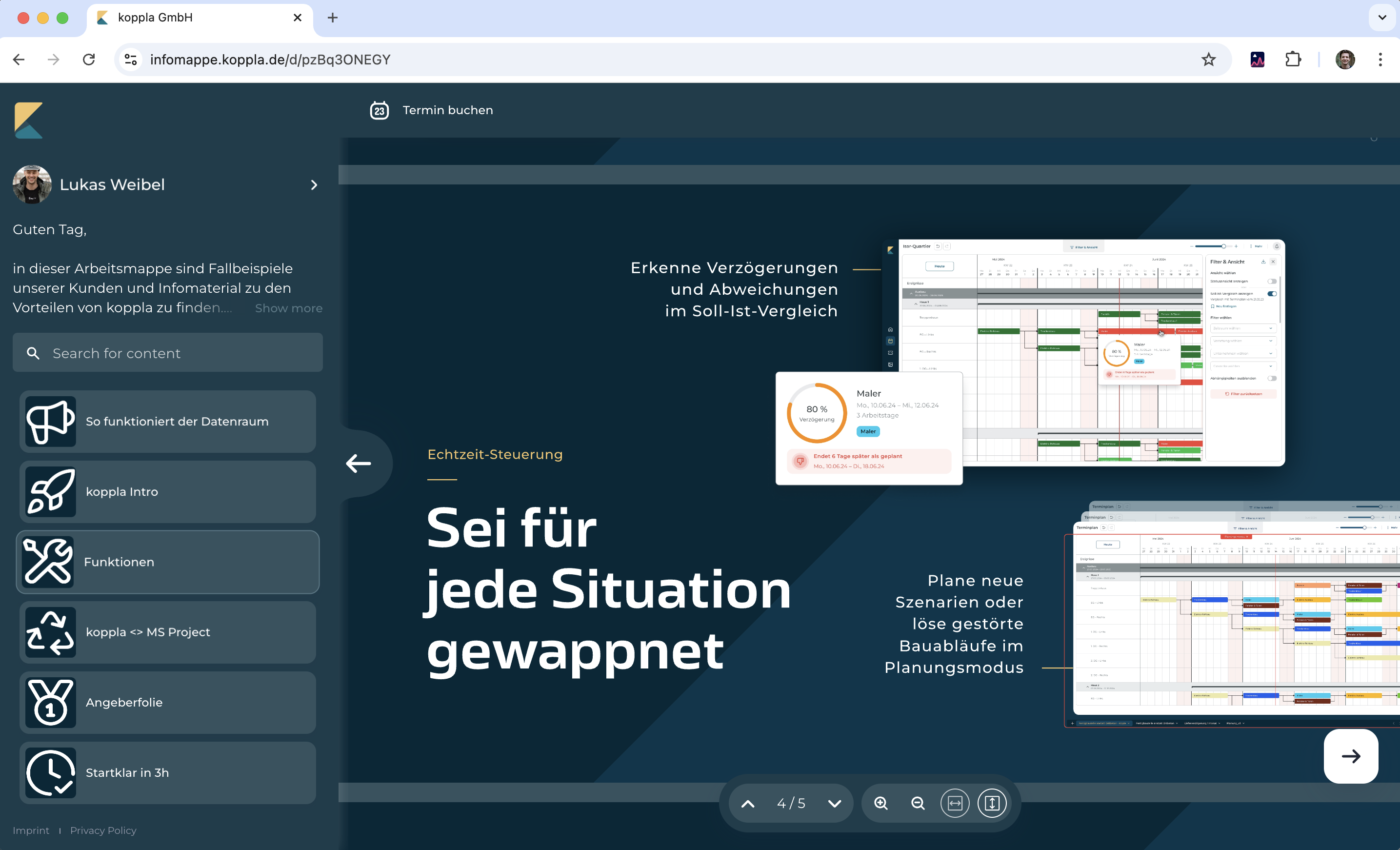
16. Emphasize visuals
Most B2B presentations are too text-heavy. Aim for 40-50 words per slide and add visuals, images and charts to help your buyer understand what you want to communicate.
17. Review content performance regularly
Meet with sales and marketing quarterly to review how content performs and identify improvements. Focus on these key metrics:
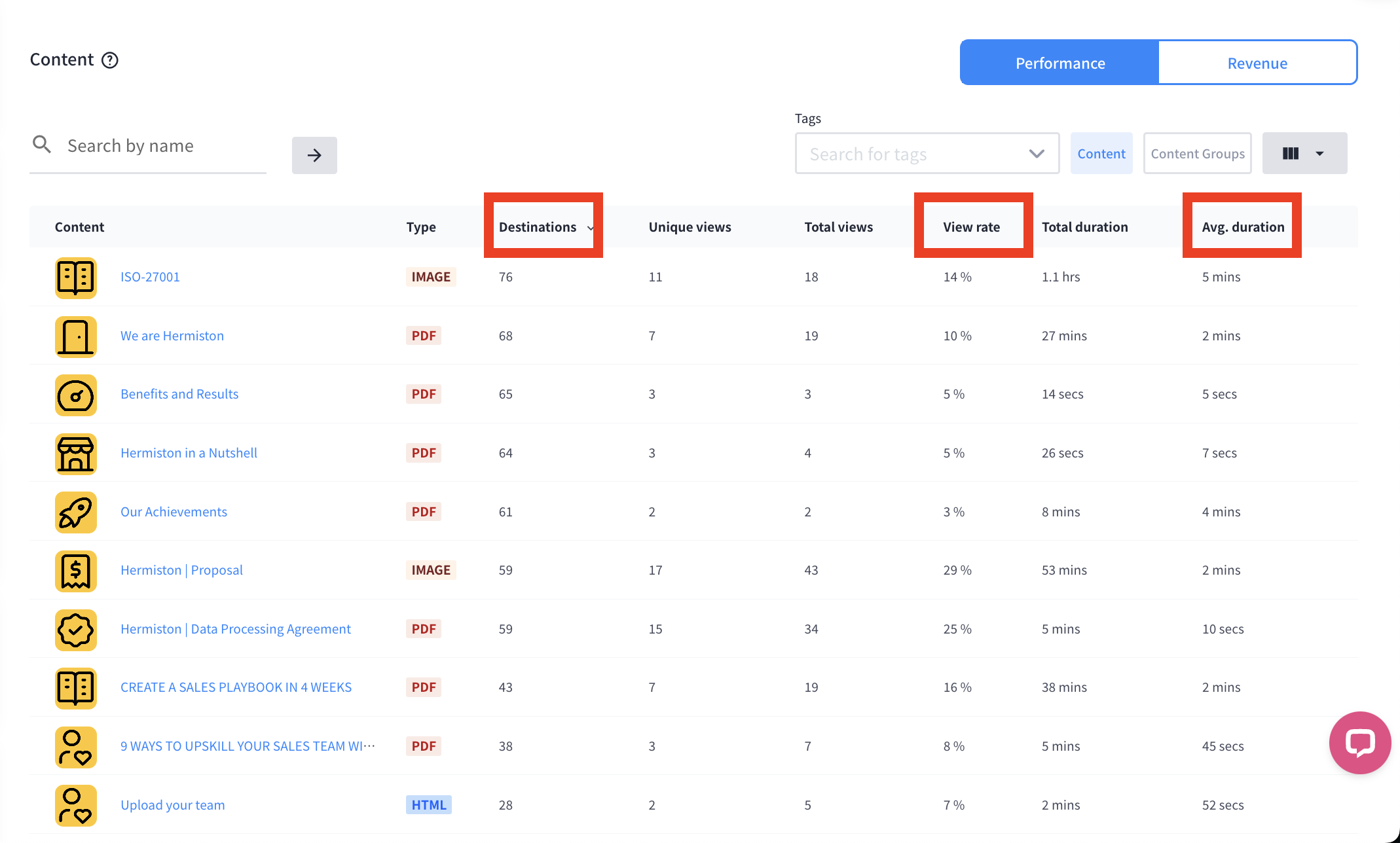
- Destinations: How often does the sales team share this content? If low, ask why.
- View Rate: Are buyers viewing it after it’s shared? Low rates might mean the title needs improvement.
- Average Duration: How long do buyers engage with it? Compare this to the content length. If low, the content might need adjustments.